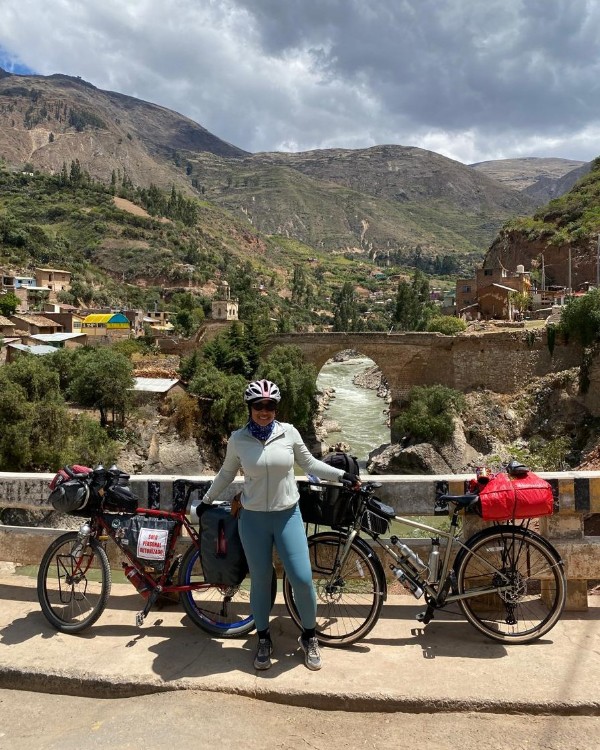
We rolled out of Huánuco in a busy stream of commercial traffic. Highway 3 serves as the principal North – South route in the interior of the country, so weren’t holding out much hope for a quiet journey.
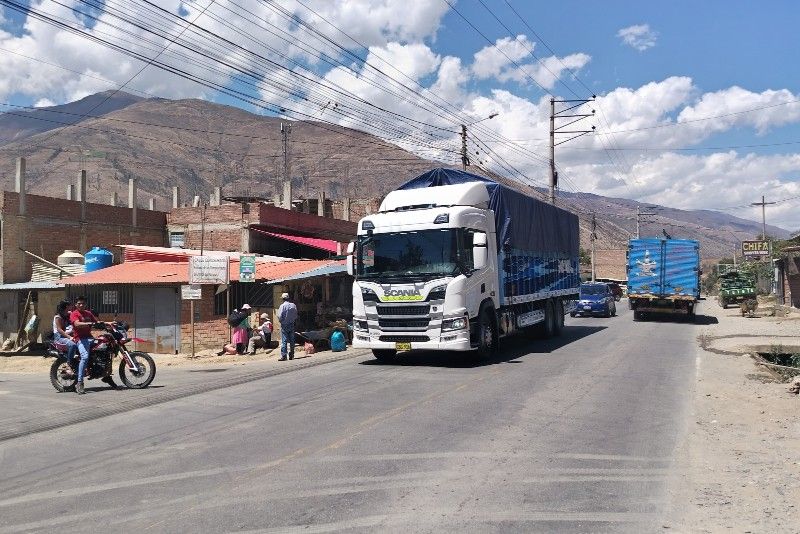
The roads were absolutely heaving with heavy goods vehicles. On countless occasions we experienced reckless overtakes, with trucks passing one another, while shaving past us at the same time, often miraculously completing the maneuver in the last possible moment before hurtling headfirst into oncoming traffic.
Our two little bicycles barely placed higher than street dogs in the transit hierarchy. Future roadkill.
We had many days of steady climbing ahead of us, culminating with a mountain pass at 4300m.
Huánuco was halfway to the Amazon Rainforest, and so had a sweltering tropical climate. Each day of ascent brought us a little bit more respite from the heat.
I had hoped to keep things relatively easy during Raquel’s first month on the bike, so I had settled for highway 3. It offered the flattest possible route down the country, without requiring us to drop down onto the coastal Pan-American Highway, with its uninspiring, and repetitive desert surroundings.
The other option had been to go the other way into the Amazon, like I had in Ecuador, but all of the zips on my trusty old tent were failing, and neither of us really fancied sharing our sleeping space with creepy crawlies.
Peru is one of the most mountainous countries on the planet, so ‘relatively easy’ was going to have a loose definition.
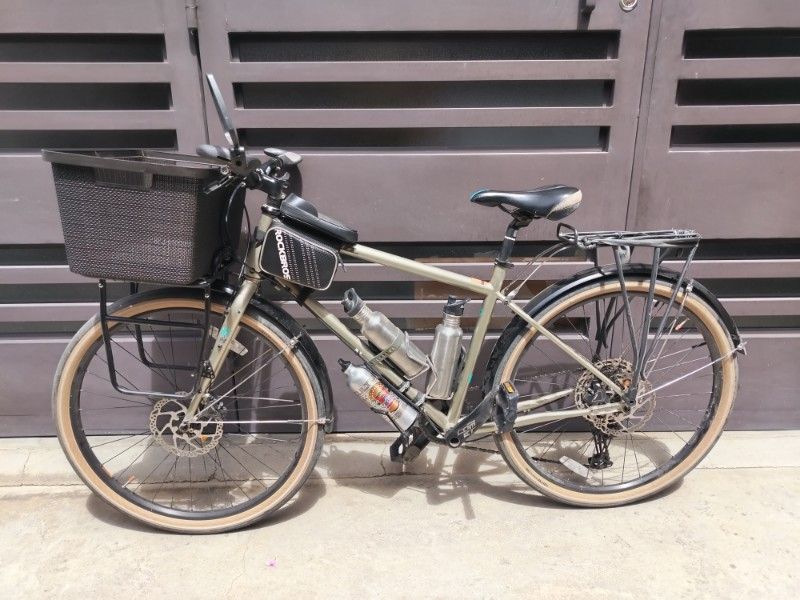
We had put in a bit of work on the bikes in Huánuco. I had gotten my rear wheel rebuilt with a new rim, while Raquel now had a big plastic storage basket on the front of her bike.
Growing up in Ecuador, Raquel had seen lots of movies set in places like Amsterdam and Paris, where ladies ride around on elegant town bikes, with a wicker basket on the front. She had always dreamed of having a bike just like that one day, so I had tried my best to provide a practical imitation. It was a bit of a DIY bodge, but it seemed to be pretty rock solid.
We struggled to find a campsite with a bit of privacy at the end of the first day, and eventually we were forced to settle on a gravel parking lot in the middle of a small village.
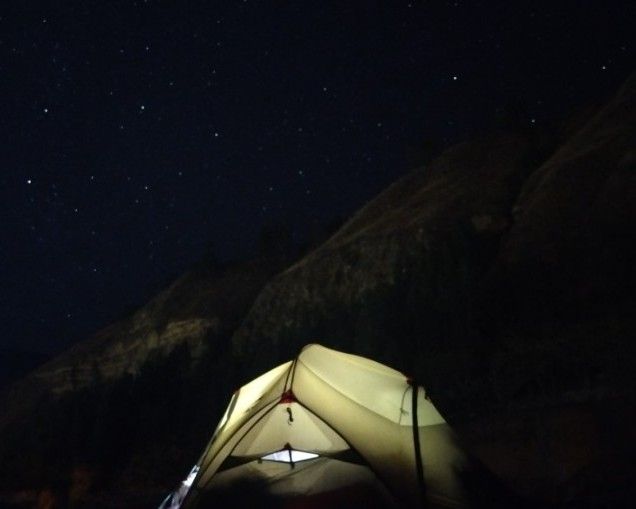
One of the zips on the inner tent was completely buggered at this point, so we decided to just permanently sew it closed, and just use the other side for all comings and goings. It took us about 2 hours to hand stitch the whole length of the zip.
We eventually got some dinner on the go.
A small delegation detached itself from a nearby house and marched over. They told us that they thought that maybe we wanted food, and gave us two plastic bottles filled of coffee, and a bag filled with a local type of fried wheat tortilla.
I stared, dumbfounded, between taking bites of our dinner, but Raquel quickly thanked them and took the offerings.
Raquel was absolutely mortified. ‘They thought that we were homeless!’
This was a disaster; Raquel’s standard refrain over the last couple of weeks had been ‘we aren’t street people’ whenever she was trying to urge me towards living in a more civilised manner in camp.
The next day we tucked into our ready-made breakfast, and then continued onwards and upwards over the next few days.
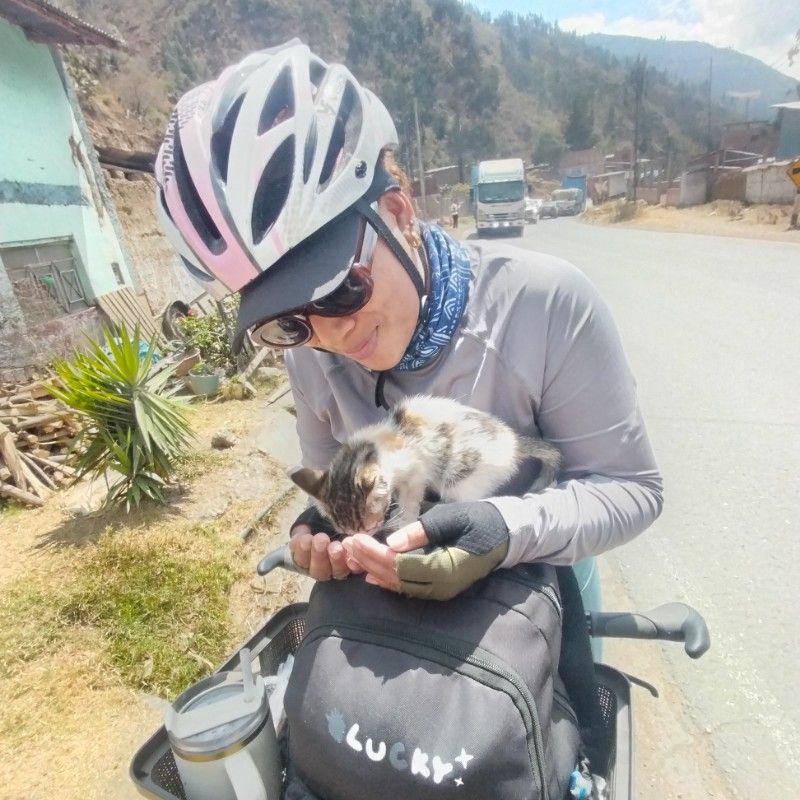
Eventually, we reached the village of La Quinua. This put us within spitting distance of Cerro de Pasco, the end point of our days of climbing.
I had been thinking about breaking this last segment into two separate days, since Raquel would need to do a full 1000m of climbing in order to make it in one. However, she decided that she wanted to challenge herself.
This was going to be her biggest day on the bike yet.
We headed out into the centre of La Quinua to look for some kind of nutritious dinner to boost energy levels for the following day.
The only thing that we could find, besides the usual bodega fare of packets of crisps, and cans of tuna, was a lady cooking chicken feet on a barbecue.
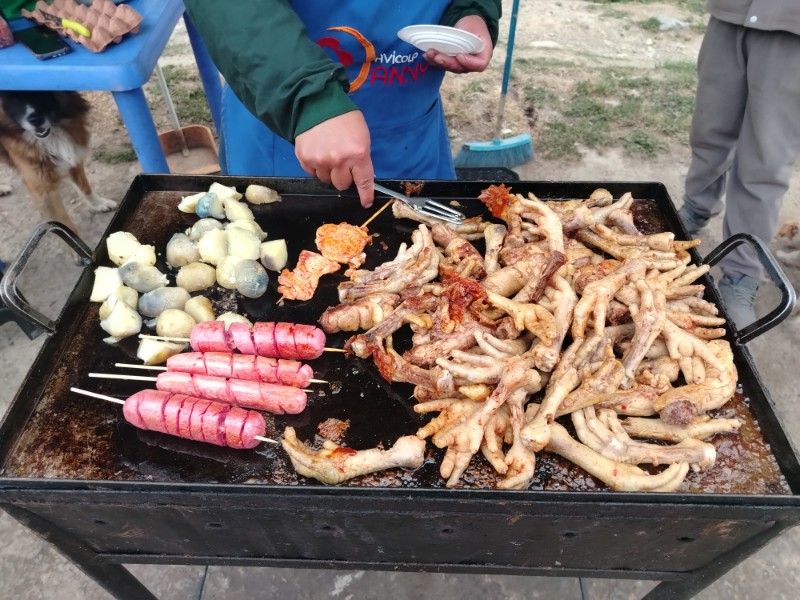
Bon appetite!
They turned out to be absolutely delicious. Very chewy, but tasty! Apparently a good source of collagen?
We kicked off the ride bright and early the next day.
The first 500m of ascent went by pretty easily. We just kept steadily plugging away at it.
But soon Raquel began to struggle with the altitude. We started taking more and more frequent breaks, and for longer.
Raquel started to really suffer, so I decided to call lunch at an isolated restaurant, to give her body time to catch up with the elevation gain.
We rolled up to the place with big smiles, reading the menu from the blackboard outside. Lots of different soups, perfect for a cold day in the hills!
We asked an employee which soups were available. She said none of them. They wouldn’t be ready for hours. Huh? I asked if we could at least get a coffee. She agreed.
We went inside and immediately beheld a client eating soup.
Our coffees arrived and Raquel asked a different worker exactly what time the soups would be ready. He responded that they were ready right now.
The first person had just been trying to fob us off. Please just keep moving. Go anywhere else. No matter that this is the only refuge for ten kilometres.
This had happened to us a few times since Huánuco; We would roll up to an apparently empty hotel, smiling sweetly, only to be told that all the rooms were full.
The day before we had received a recommendation from a bystander to go to a specific place to eat lunch, however, upon arriving, we were told that no food was being served.
I guess that we might come across dangerous vagabonds, or something like that?
Carlos in Cajamarca had told me that parents tell fairy tales to their kids about an evil white woman coming and snatching little children. Seems a bit ludicrous, but I reckon that these stories could have been all too relevant at one point, considering everything that Europeans have done in this part of the world.
Raquel is of African descent, and people are, for the most part, not particularly worldly or well travelled in Peru. Traditional racial stereotypes are very much alive and kicking.
Thing is, Peru, like Ecuador, is currently experiencing a surge in violent crime, and, just like Ecuador, the locals are mostly blaming foreigners for this.
You can get rather spoiled by incredible acts of kindness from strangers while travelling by bike, that you begin to see the world with a rather unrealistic rose-tint. So it’s unnerving to have someone slam the door in your face.
I guess the combination of this sort or treatment, the apparent complete lack of respect for human life on the part of drivers here, and constant attempts to rip us off were really starting to wear both of us down.
Raquel and I had both gotten physically attacked by the coked-up manager of our own hostel in Huacachina, which had certainly put us on guard ever since.
Raquel admitted that at this point she just really wanted to get the hell to Bolivia as quickly as possible. She was especially upset by the poor standards of hygiene exhibited in the restaurants. We would often play the ‘find the hair’ game whenever a meal was placed in front of us.
Having discussed all of this stuff at length, we got back on the bikes and begun hauling ourselves uphill again.
After an hour of comparatively easy going, Raquel’s difficulties with the altitude returned with a vengeance.
We would pedal for about a minute or two, then pause for a good minute to recover, before repeating the process. All the while a steady stream of commercial traffic roared past, leaning on their horns as they went.
It took a very long time to finally get to the top. Things had long since deteriorated beyond the point where lighthearted or goofy comments could lift spirits.
I reached a sign indicating the altitude of the city, and asked whether Raquel wanted to grab a celebratory selfie with me. ‘No’ she replied, and I realised that she was quietly crying to herself.
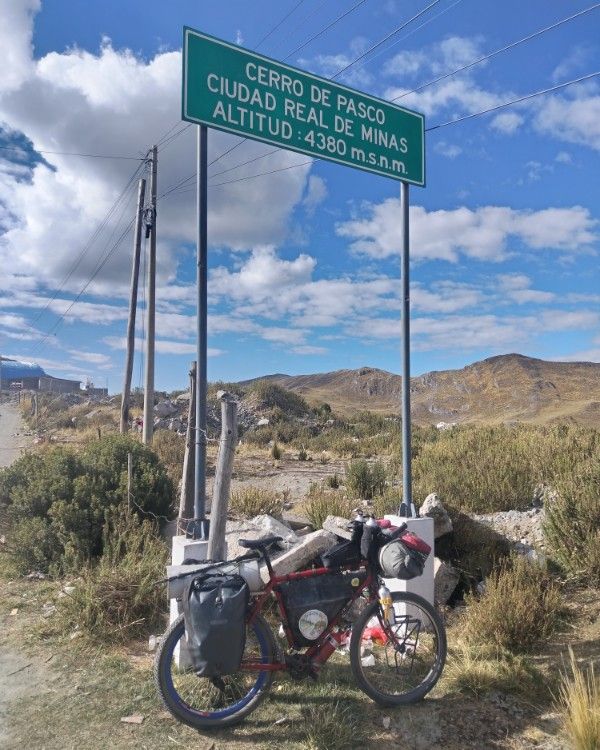
Thank goodness that it was downhill all the way to the centre of town from here.
We passed a sign that said “highest city in the world”. Not strictly true, but a hell of a thing to see after a big day of climbing on a bike.
I was incredibly proud of what Raquel had achieved. She had approached her physical limit, and at no point had she opted to get off and walk. She had just kept trying and trying again. She never so much as entertained the idea of cutting the day short and making camp.
Now it was time for a couple of days of rest. Don’t even look at the bike. Eat as much as you physically can, the same for sleep.
Unfortunately, we had a particularly energetic and vocal couple check into the room next door. They went at it literally the entire night, every 30 minutes or so.
The next day we headed out to see the sights of the town.
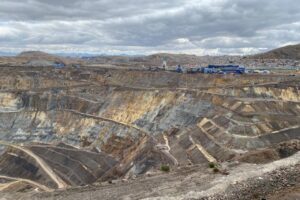
I had been really interested in visiting Cerró de Pasco ever since I had first heard of it. It’s an enormous open pit mine, with a city built around the outside.
It’s like something out of a dystopian science fiction movie. I couldn’t believe that people would live like this by choice.
The first thing I noticed upon arrival was the smell. I don’t know how to describe it. Industrial? A hint of burning? Maybe just dust, or the accumulated muck of thousands of people and animals living on top of one another.
The whole city is polluted with heavy metals from the mine. You obviously cannot drink the water.
I guess we were fine for a couple of nights, but I imagine that the accumulated effects of exposure to contaminants over years of living in the city must be significant.
This city is Perú summed up in a nutshell. The national economy is completely dependant on mineral extraction. The lithium in the batteries of the device that you are reading this on very likely came out of a Peruvian mine. Gold, silver, steel, copper, rare earth’s, all the ingredients needed for our flashy modern tech can be found in the ground here.
If you are a Peruvian working in the mining industry you have it made; cash is going to come in hand over fist.
Otherwise, like the rest of society, you are forced to suffer all the environmental consequences, but see very little in the way of financial benefits come your way.
Most of these mines are operated by foreign corporations. Peruvian politicians get a cut from their ‘lobbying’, and regular people get squat. The current president, Dina Boluarte, has a paltry 2% approval rating, due to blatant acts of corruption. She’s recently given herself a bump in salary too, how magnanimous?
Francisco Pizarro and his conquistadors would be so proud if they could see everything that is happening. The rape of this land by outsiders has surely gone beyond even their wildest dreams.
Some Peruvians have decided to take their land’s wealth into their own hands, opening their own unofficial ‘illegal’ or ‘artesanal’ mines (named either way depending on whether the speaker is for or against these operations). Unfortunately, since they cannot rely on government law enforcement to maintain their security, less than savoury characters often end up moving into that power vacuum. I have been constantly seeing stories about murdered miners on the covers of newspapers ever since I first crossed the border into Peru.
Cerro de Pasco is the official, legal variety, but It’s not exactly a tourist destination.
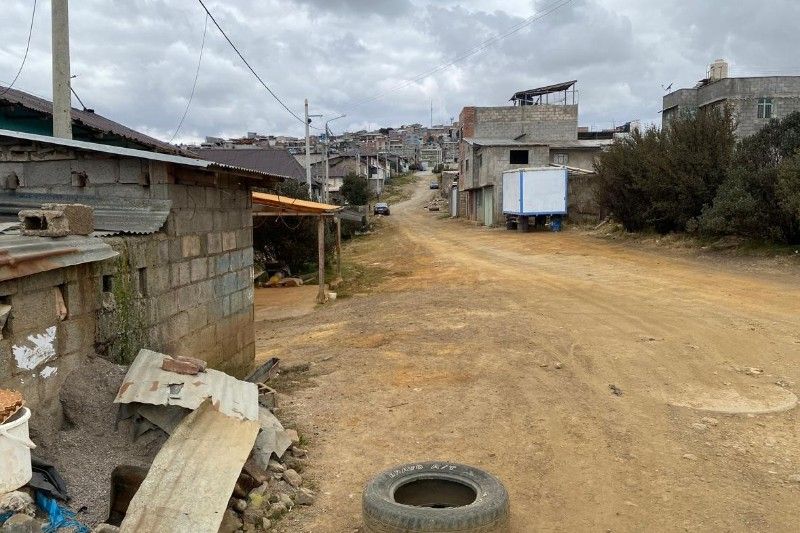
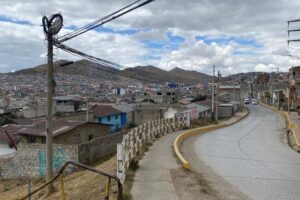
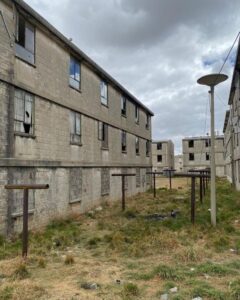
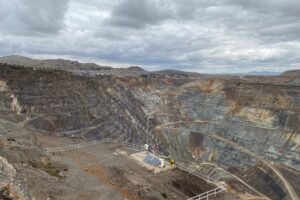
The gigantic open pit mine that dominates the centre of the city.
Food options were about as diverse in Cerro de Pasco as they had been in all the small towns that we had passed through. Essentially several variations of chicken. Nothing particularly inspiring, or clean.
The next day the inevitable happened, and I wound up spending most of my time on the toilet.
The day after that it was time to get the pedals moving again.
We climbed out of the crater-like centre, up and over the rim, and back onto highway 3.
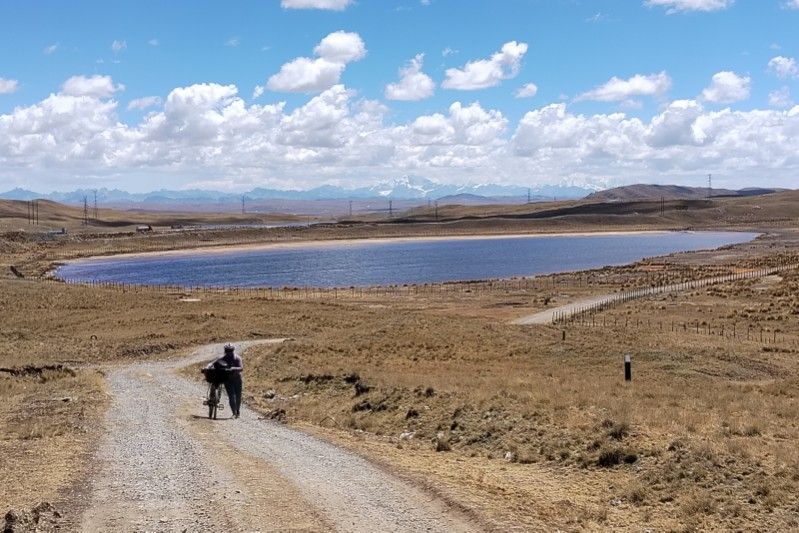
On the way we passed a couple of small lakes, where we spotted our first wild flamingos!
Once on the big road again, we got a rare treat in the form of a long, flowing descent for the first couple of hours. We even had a tailwind too! This never happens…
Eventually the highway settled into regular undulations. Spells of steady, but gentle climbing, followed by generous descents. Good mile munching terrain.
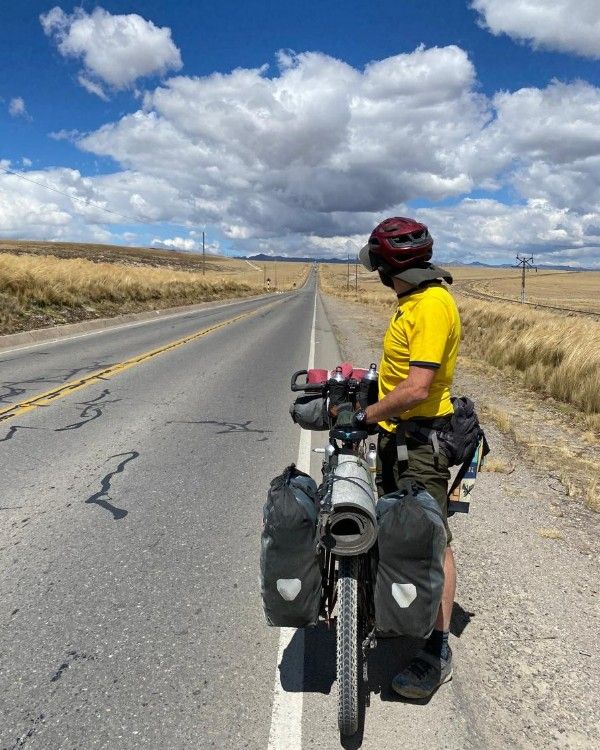
The road carried on in much the same way the day after. Unfortunately my stomach problems returned with a vengeance.
The pharmacist in Cerró de Pasco had prescribed me a single antibiotic pill, and I had mistakenly assumed that this was the full course.
I had to beg to cut the day short at Junín, where we checked into a hotel, and made sure to buy a full treatment.
Apparently, in Perú the punter needs to request the number of days of antibiotics from the pharmacist, which probably explains why some of the most antibiotic resistant strains of bacteria come from this continent.
All the same, I didn’t really recover until several days later.
Leaving Junín, we passed by the memorial of the Battle of Junin, one of Simon Bolívar’s decisive victories against the Spanish Empire.
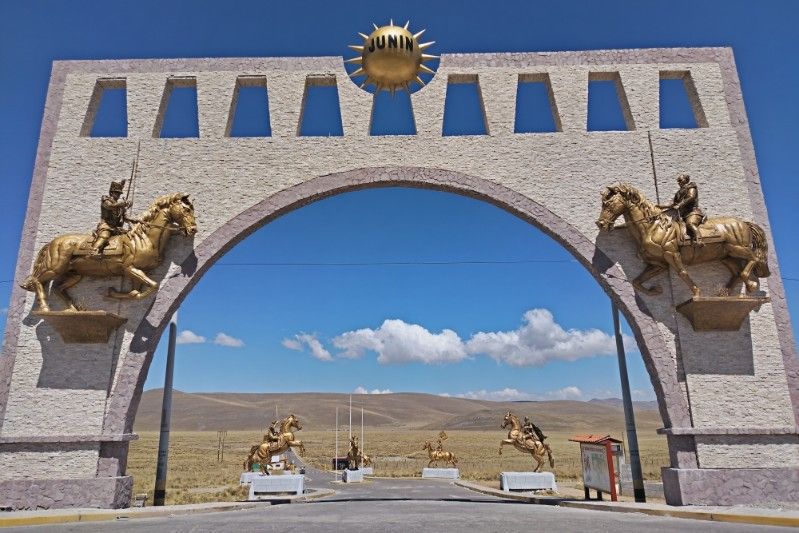
It’s sometimes referred to as ‘the Silent Battle’, since it was a clash of mounted soldiers with edged weapons, with no shots fired.
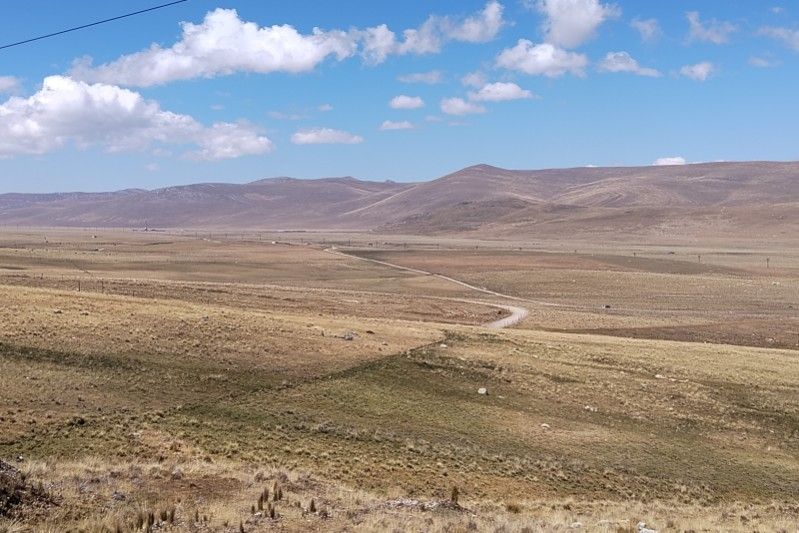
The battlefield is more or less flat, excellent ground for cavalry.
We plugged on for a bit longer, still enjoying the generous tailwind, before beginning a long, gently winding descent.
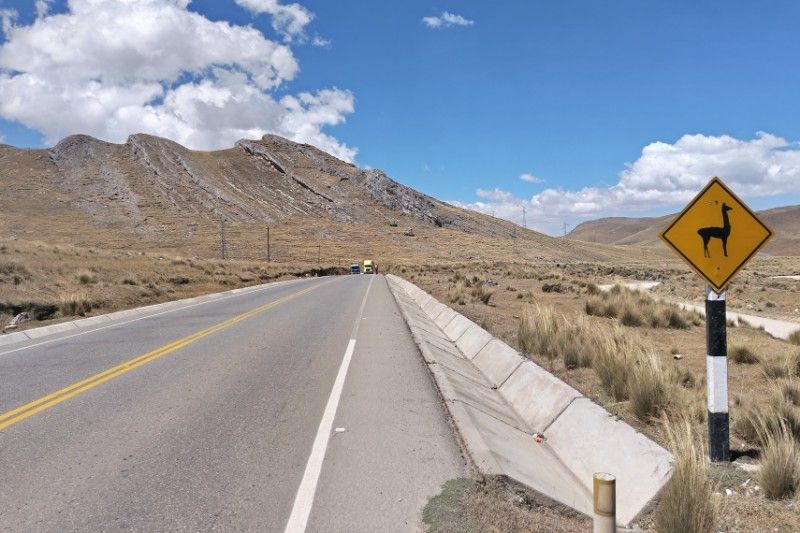
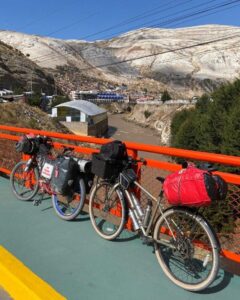
Rolling into La Oroya.
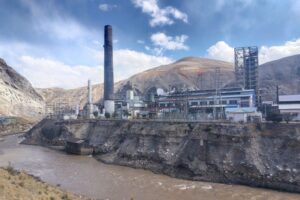
The town of La Oroya was dominated by this large industrial complex.
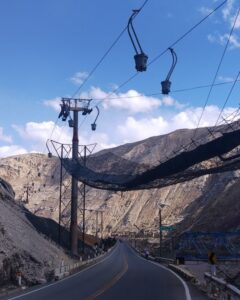
We absolutely ate up the kilometers. What a difference a nice long downhill makes!
We ended up doing 77km to our camp for the evening. Raquel was pushing for more, but once again I begged for an earlier finish, due to feeling poorly.
I made up for it by building a nice big campfire. A welcome change from hunkering down in our sleeping bags for the whole evening in order to stay cosy.
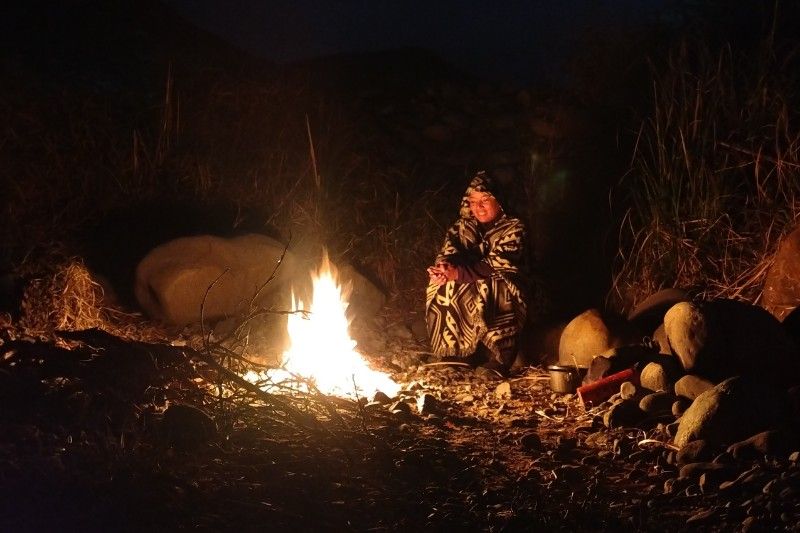
More ups and downs the next day.
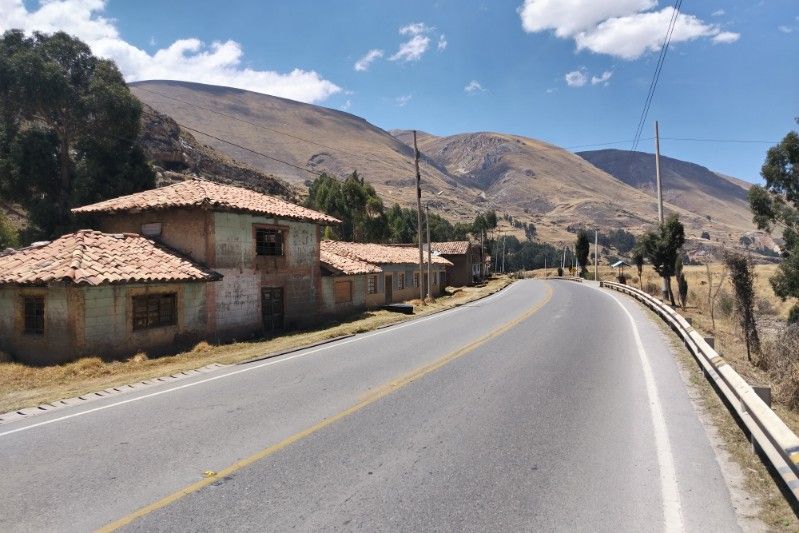
We made it to Jauja. Cold shower, but a nice hot pizza.
Last stretch to Huancayo, a cosy Airbnb waiting for us at the end.
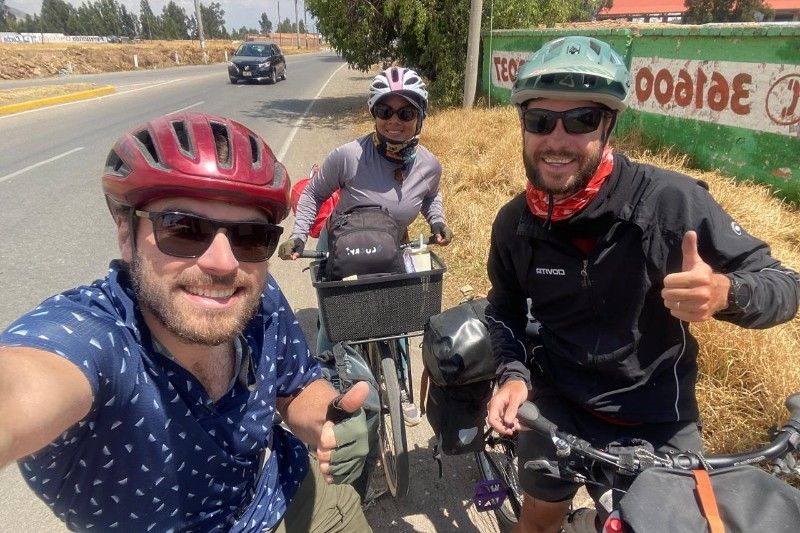
We ran into Jason, from South Africa, heading the other way. He started in Buenos Aires about six months ago.
We pressed on. Just plugging alongside a multilane road. Pretty joyless. The upside? Lots of ice cream sellers by the roadside.
At one point we got fed up with the unruly traffic, and tried to take an alternative road following the old railway line, but it was an undulating dirt road, which slowed us down considerably. We decided to just head back to the blacktop and get it over with.
City riding with a loaded bike is pretty crap. Trying to keep a good pace in traffic is exhausting. Trying to thread your way through gaps between vehicles is often impossible.
We made it to our Airbnb, which turned out to be at the top of several flights of stairs. A neighbour kindly offered to store our bikes in his garden for a few soles, and we readily accepted.
We zoomed off to the nearby hypermarket, and filled the shopping cart with all of the fruits of civilization. Raquel is a big fan of my chilli con carne (BBC good food’s chill con carne really…), which seems to be just about perfect for ramming a load of vegetables in the face, after weeks of greasy Peruvian fast food.
The next day we tried our hands at making a prawn curry. Spices are pretty thin on the ground here, but we managed to improvise a surprisingly decent tribute, using paprika, cumin, turmeric, cinnamon, salt, and black pepper for flavour. Another fantastic opportunity to put more vegetables into our faces, with beautifully fresh tomatoes, onion, garlic and ginger.
Of course I had to make a full English fry-up for breakfast each morning.
Netflix and a nice cosy sofa. Hot showers on demand. Absolutely delightful.
After three nights we felt like we had gotten a full mental reset, and now it was time to get back to the task at hand.
Unfortunately, we got rained on for most of the first day out of Huancayo, our first spell of precipitation since leaving Huaraz.
We were forced to put the tent up in the rain. A soggy evening by the roadside. Was it too late to turn back for our Airbnb?
The next morning we spread out all of our bike kit in the sun, and managed to get everything dry before getting on with our ride.
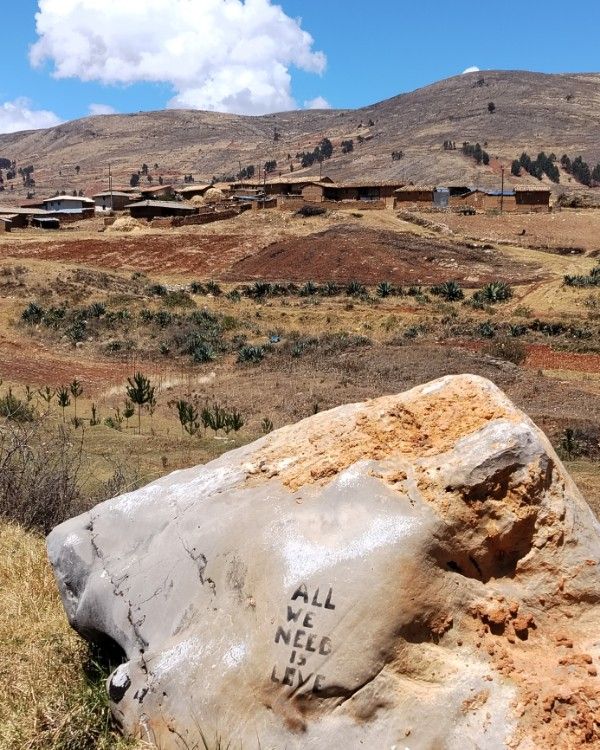
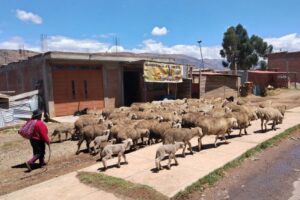
20km of steady climbing. The altitude wasn’t anything like we had had leading into Cerró de Pasco, but Raquel still wasn’t having a great time going uphill.
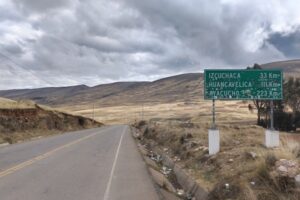
We had a nice long lunch, and then rolled downhill into a river valley on the other side.
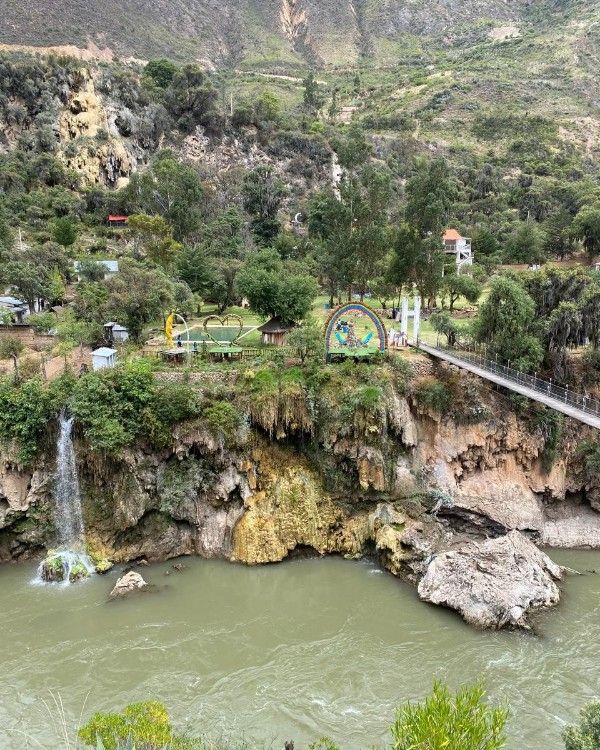
We happened upon a campsite at a hot springs spa resort. The pools were stone cold, but it was nice to have flushing toilets, and electricity to charge our devices.
Raquel needed to be connected to the Internet to manage her small business back in Quito, so we had to motor over to Izcuchaca to get phone signal.
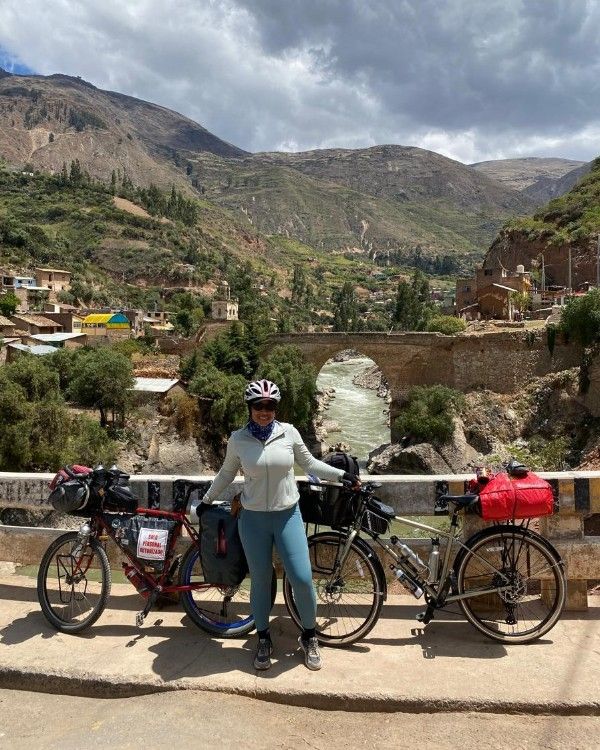
What a beautiful little colonial town!
We called an early lunch, while Rak pattered away on WhatsApp.
Back underway again, following an increasingly broken road. Eventually it gave upcompletely and turned into a dirt track.
But another, surprising, transformation took place at the same moment: the people got nice!
Kids started calling out ‘buenas tardes’ from the roadside. Adults started calling out ‘Gringo!’ with a big grin on their faces as we passed by. Inquisitive and friendly locals moseyed over to have a chat when we paused for our second ice cream break of the day.
What a difference good people make!
This was like returning to the Perú I had known up north for the first couple of months, but that which I had sadly missed since leaving Pallasca. The people of Chimbote, Huaraz, and most of the touristy places we had visited along the coast didn’t exactly show their best sides.
So it made a huge difference to finally get some good vibes from the humanity surrounding our fragile little bubble.
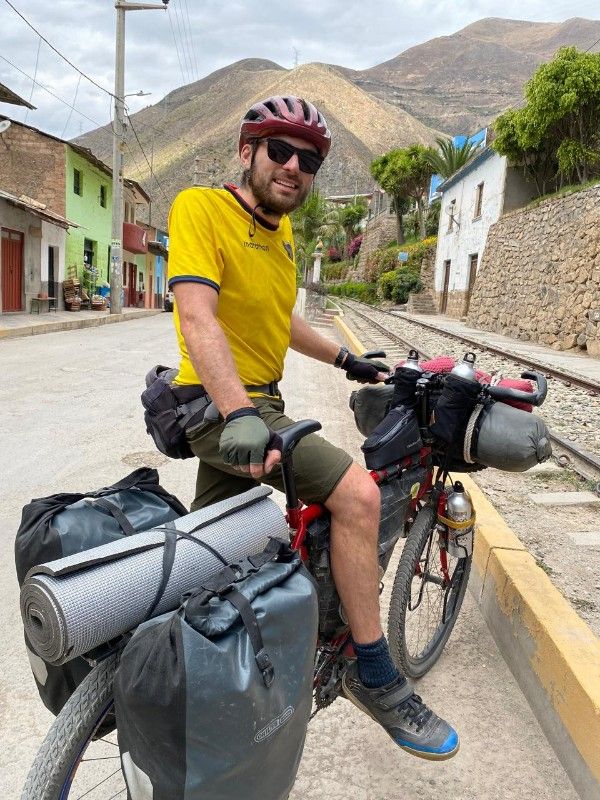
Nice people, happy Chris.
The further we went, the worse the roads became. We were well off the beaten track at this point; all the heavy, commercial traffic had taken the paved route, climbing up and over the side of the valley. We had chosen to skip the elevation gain and noisy traffic, in favour of dust, and the sounds of nature.
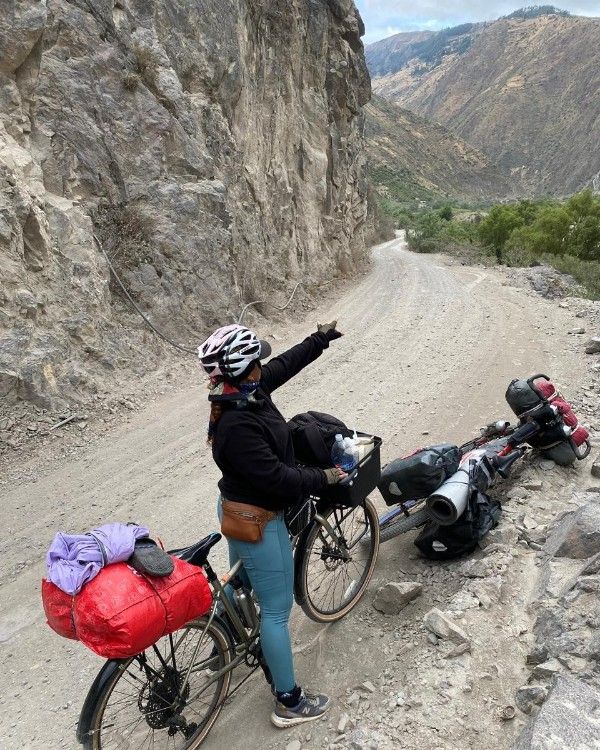
I got far too excited when a noisy flock of Amazon Green parrots passed overhead, which gave me a strong sense of nostalgia for those 90’s adventure movies from my childhood, like we were trekking through some hidden valley.
We camped in the bushes by the roadside. Lot’s of biting flies, but we had a couple of secret weapons lurking in the panniers…
First up, a couple of cans of whole milk yielded a lovely, rich hot chocolate. The next morning we had scrambled eggs for breakfast. What luxuries!
We really smashed the first hour or so of climbing, but Raquel started to feel under the weather.
Then I managed to get a puncture. At least this time it was an honest one, coming from the outside of the tyre. I quickly patched up and we got back on our way.
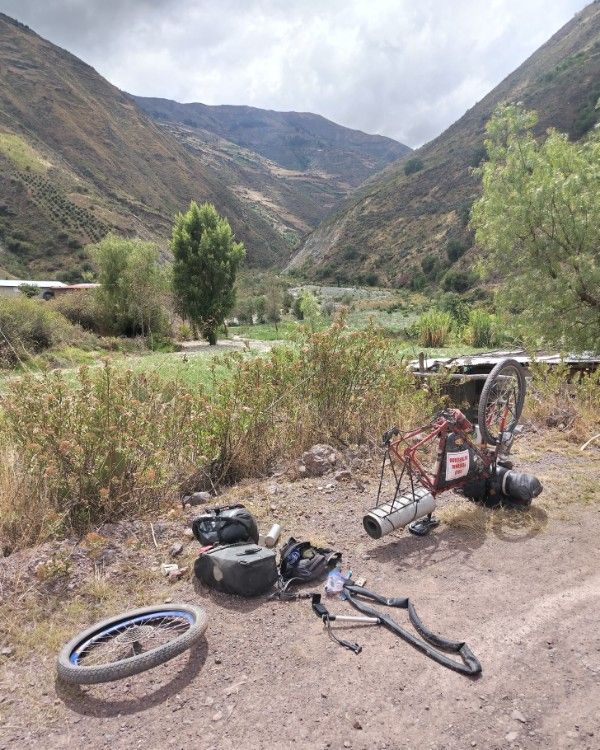
The riding got really interesting; an increasingly narrow dirt track high up on the side of a steep valley. There was a lot more traffic now, and we frequently found ourselves disappearing inside deep clouds of dust.
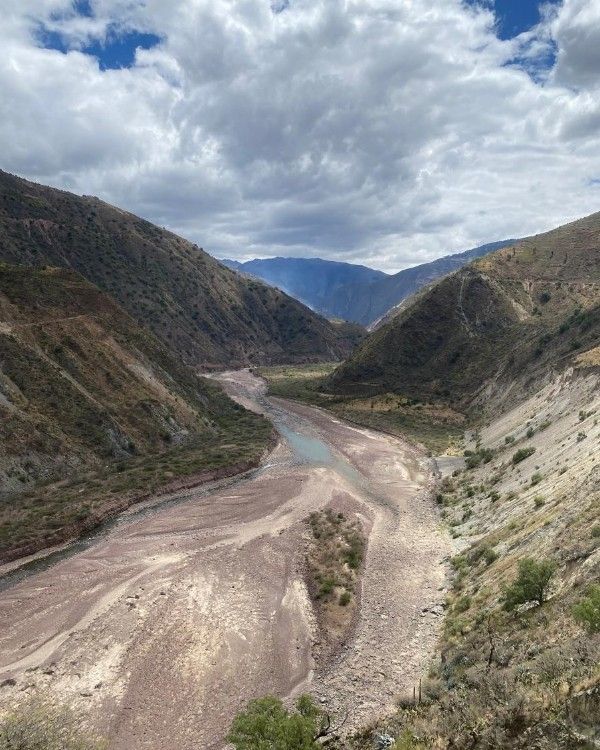
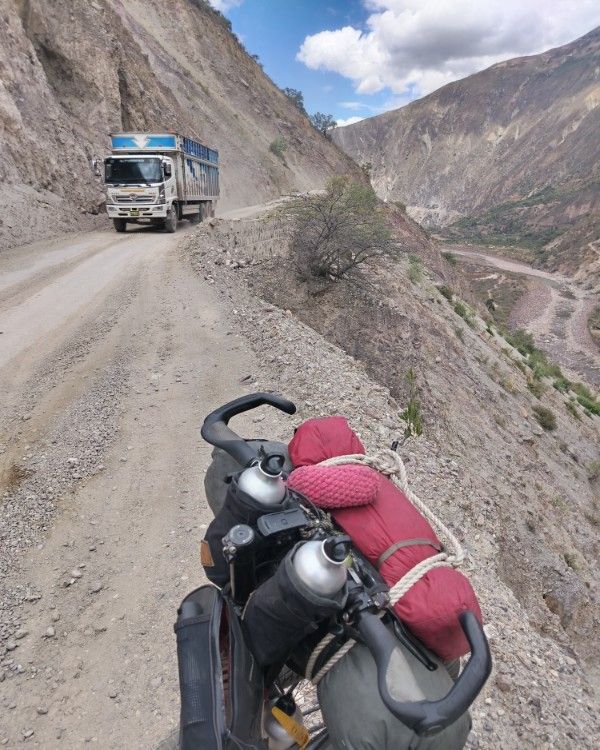
The roadside lined with memorials of people who had unfortunately never arrived at their destinations.
Everyone else was driving in typical Peruvian style; as fast as possible, in the middle of the road, and tooting their horn just before every corner. If they heard an answering toot from the other side both parties would slam on their brakes and do their best to pass one another.
A couple of times the road was too narrow to permit both vehicles, so someone had to reverse until they found a passing place.
No one was expecting to see two bicycles chugging along in the midst of this dusty turmoil. We did our best to keep ourselves out of harm’s way, but it was still pretty sketchy.
Raquel continued to feel more unwell, so we called an early lunch break at La Esmeralda.
I reckoned that we would need another full day after this one to reach Haunta, the nearest city, and Raquel was really not in a good way. It didn’t seem to make much sense pressing on and making her suffer solely in the name of adventure, when we could just bung the bikes in the back of someone’s truck and get her somewhere comfortable for a couple of nights of recovery.
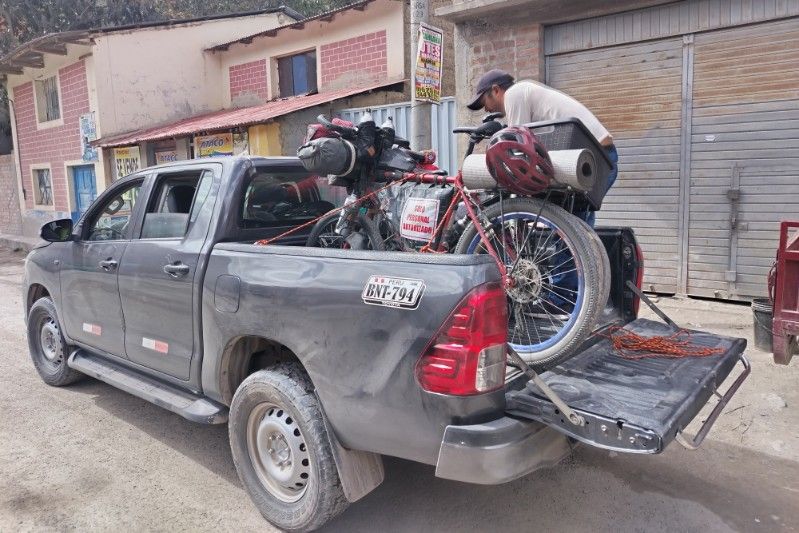
Yes, I was a bit miffed to miss out on what I considered to be a classic section of adventure cycling, but I decided to head out alone the next day to make up the distance that we had skipped. Our Airbnb host recommended that I visit a viewpoint overlooking a nearby canyon downstream. It turned out to be an absolutely cracking ride, and leaving the panniers behind for once was a real treat!
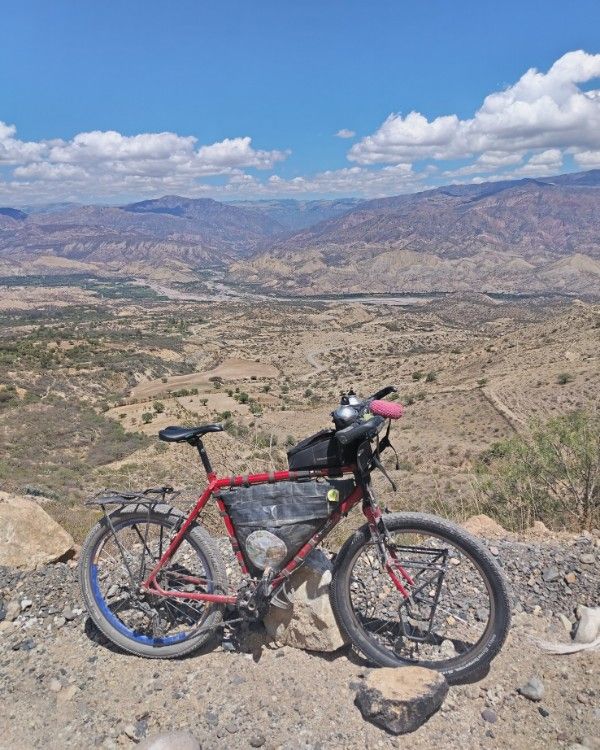
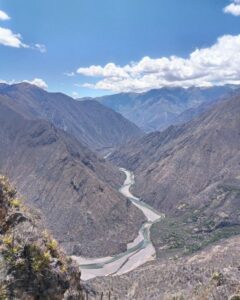
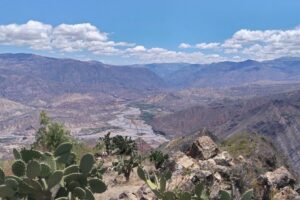
Raquel had a nice easy day of pottering around town, and we both woke up fresh and full of beans the next morning.
I had spotted cracking on my front tyre, and on closer inspection I could see the blue puncture protection showing through.
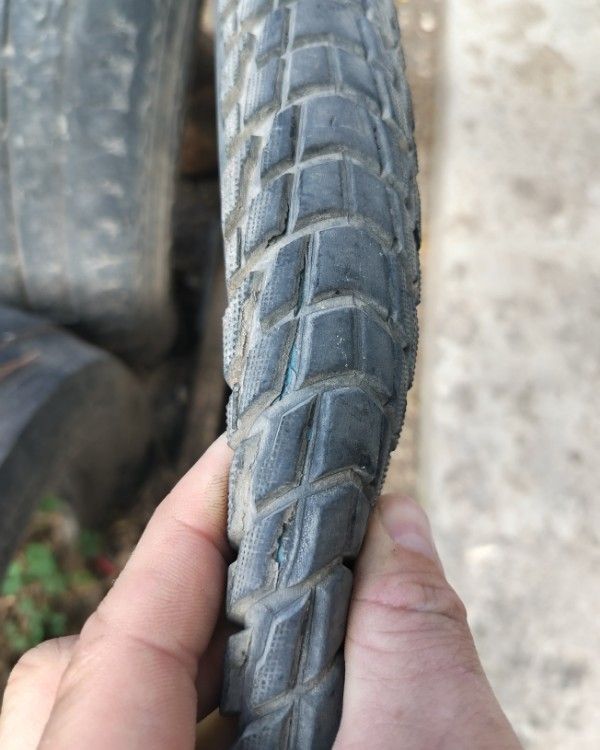
I couldn’t believe it. These ‘Schwalbe Marathon Plus’ tyres were supposed to be the toughest in that brand’s line. They weren’t bloody cheap either! Nor were they exactly lightweight. This was the second time that this had happened, with my rear tyre failing in exactly the same way on the way out of Cajamarca.
According to the gauge on my pump, I had never put more than 45 PSI into either tyre, and supposedly they were good up to 60. Could the heat of the sun really have caused them to rise in pressure more than 33%? Could my gauge be underreading that much? Squeezing the tyres by hand hadn’t revealed them to be rock-hard at any point on the trip.
I put my remaining spare Surly Extraterrestrial tyre on the front. Now I pretty much had returned to the exact same arrangement that I had run in my last few months in Mexico. I should have just left Quito like this to begin with…
One last push uphill to Ayacucho.
OSMand told us that it would be just a smidge 1000m of climbing, which would be comparable with our day rolling into Cerró de Pasco.
Of course I got a puncture…
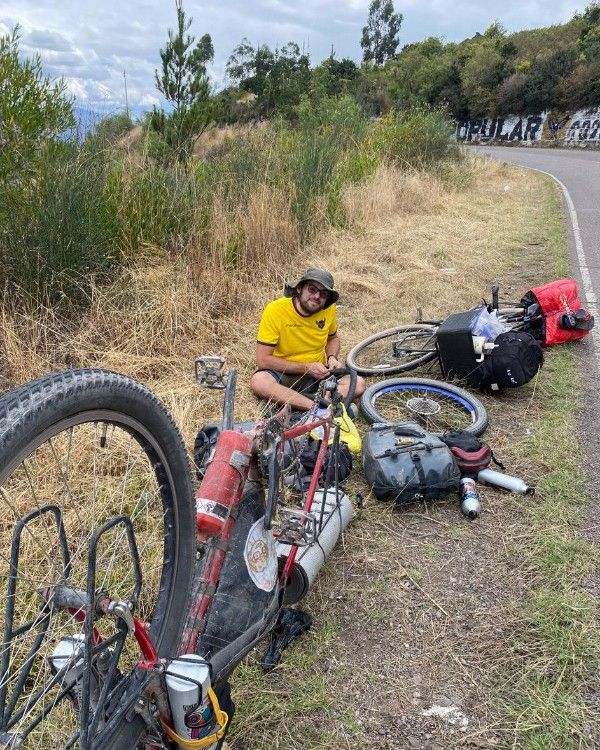
It got pretty hard near the end. Climbing up through the city streets in an unruly stream of noisy traffic.
We finally rolled up to our accommodation.
Ready for a nice long break, before tackling the road to Cusco.